Benefit proposal template: what every proposal needs
The seven sections a client expects, in the order they read them, with a free PDF template, a worked example and a checklist for the day you send it.
Download the free client proposal template (PDF), no account needed, or the Excel and PDF benefit comparison templates for the comparison pages. Both are manual templates.
Planlined builds the same structure from one connected case. Start a 7-day free trial with full features. A card is required to start, and Professional bills $75 a month after the trial unless you cancel first.
One case, from source files to delivery
Planlined gives brokers a connected workflow for the work that happens between a carrier quote and the client meeting. Keep the source documents, comparison, recommendation, and delivery materials linked to the same case.
Bring in and review the carrier material
Start with carrier quotes, rate sheets, SBCs, invoices, and spreadsheets. Review important plan data alongside the source files so the case is ready to become the foundation of the recommendation.
- Organize current, renewal, and alternative plans in one case.
- Confirm plan data before it appears in the client comparison.
- Keep source material available when a value needs to be reviewed.
Work the recommendation safely
Use Scenario Manager for contribution and enrollment alternatives. The baseline case remains intact while a named working scenario captures the changes under consideration. Adopt the selected recommendation deliberately when it is ready to move forward.
Deliver what the client needs
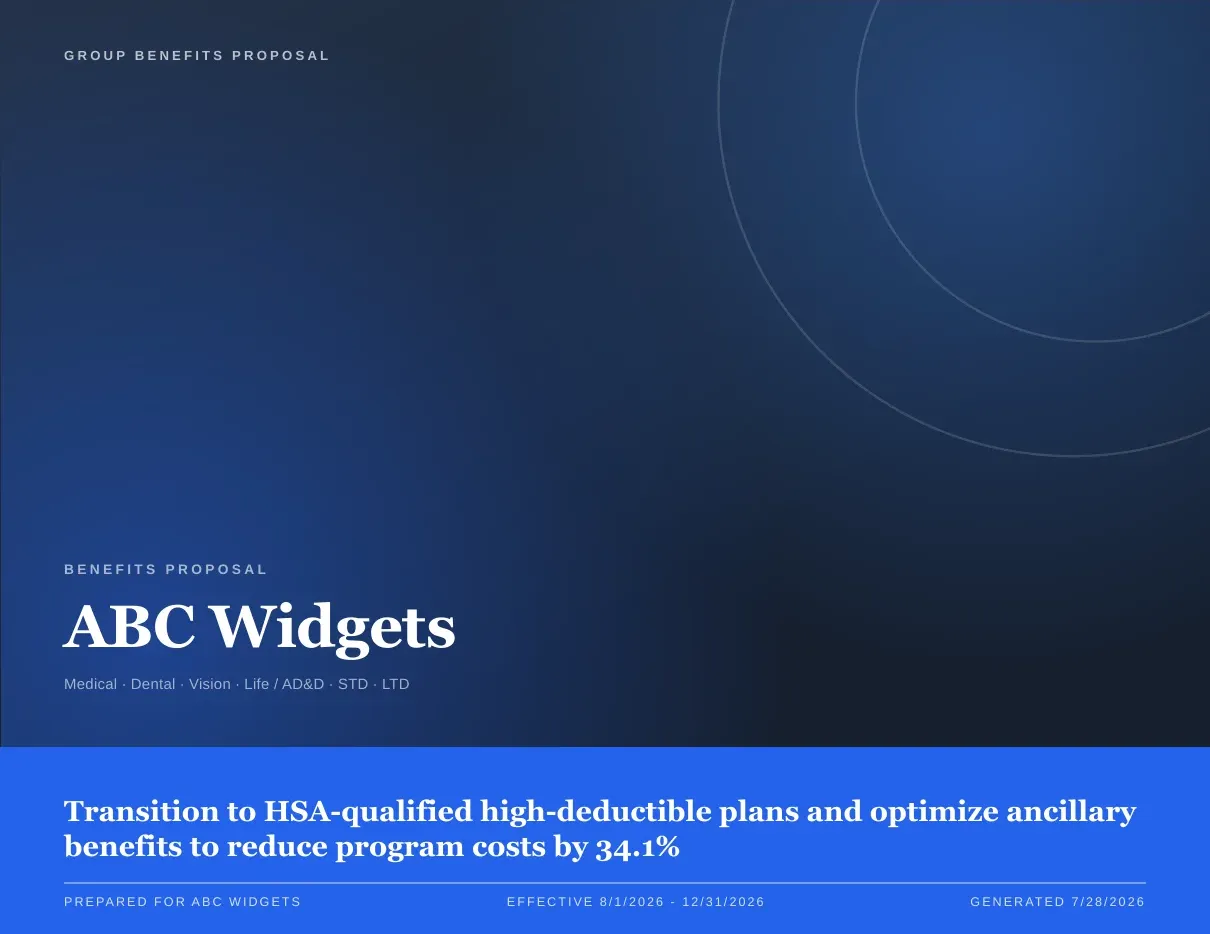
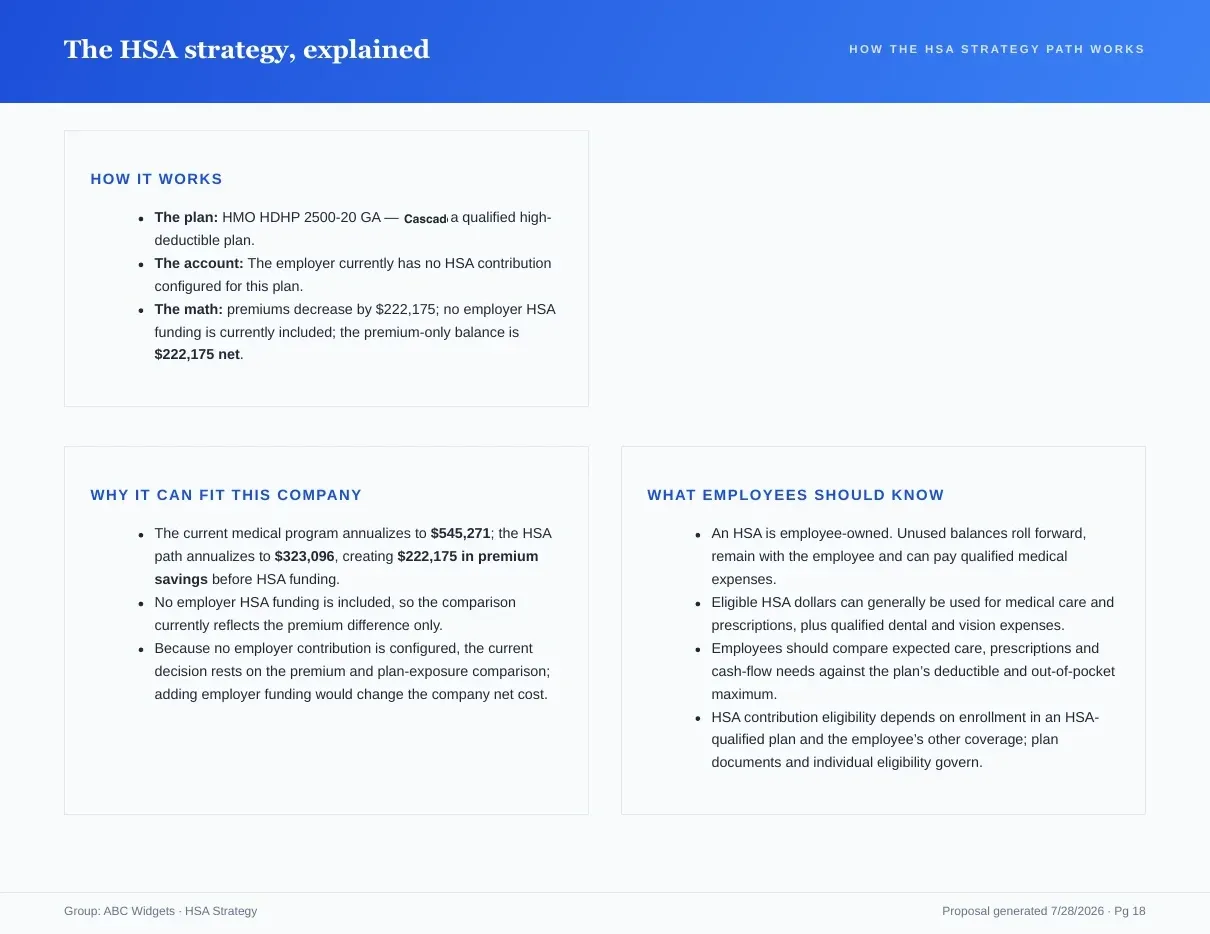
Use the approved case to create the material that fits the moment: a designed Proposal Book, a Present Proposal deck for the client conversation, or a Benefit Guide for employee enrollment communication.
- Proposal Book: a designed, branded recommendation (see the proposal branding guide for setting up your agency's look).
- Present Proposal: a meeting-ready client deck.
- Benefit Guide: employee-facing enrollment communication from the same case.
What a benefit proposal has to contain
Whether you build it in Word, in a deck, or from a case, a benefit proposal answers the same seven questions in the same order. If you are looking for a benefit proposal template, this is the structure worth templating:
- Cover. Client legal name, plan year, lines of coverage, and who prepared it.
- Program financials. Every line of coverage — current, proposed and alternate — with the employer and employee split. This is the page the CFO reads first and often the only one they read twice.
- Benefit comparison. Plan design line by line: deductible, coinsurance, out-of-pocket maximum, copays, prescription tiers and out-of-network benefits, with the rates underneath.
- What employees pay. Per-paycheck deductions by coverage tier, on the client's actual pay schedule. Monthly premiums mean nothing to an employee paid every two weeks.
- Multi-year projection. What each path costs beyond this renewal, so the decision is not made on a single year's number.
- The recommendation, in plain language. Which path you advise and why, in sentences a committee member can repeat to somebody who was not in the room.
- Next steps and acceptance. The decision path and a signature line, so the meeting can end in a decision rather than a follow-up.
If you are building proposals from a template today
Doing it by hand once is worth it — it teaches you which fields carriers describe differently and where the arithmetic hides. Start from a comparison layout such as the benefit comparison template, track the quotes themselves with a carrier quoting template, and assemble the seven sections above around them.
A template has one structural weakness, and it is not the design: nothing in it is connected. The rates live in a spreadsheet, the plan design in a Word file, the paycheck math in a second spreadsheet, and the recommendation in a deck. When a carrier sends a revised rate sheet — which happens late, and often — every one of those has to be updated by hand, and the one that gets missed is the one the client notices. That is the specific failure a connected case removes: the comparison, the paycheck figures, the projection and the proposal all read from the same reviewed data.
A worked example: Ridgeline Components
Ridgeline Components Inc is the sample case Planlined ships with — a group renewing medical alongside dental, vision, life and disability. The proposal takes shape in five moves:
- Bring in the current SBCs, a recent invoice, the census, the incumbent renewal, and the competing quotes with their rate sheets.
- Reconcile the invoice against the census, because enrollment counts multiply every figure in the financials section.
- Confirm the flagged plan values against their source pages, then designate each plan as current, renewal or alternative.
- Model the contribution strategy in a named scenario — for instance an HSA-qualified buy-down with the employer holding its dollar contribution flat — and compare it with the baseline before adopting anything.
- Export the book from the adopted scenario, with the paycheck page reflecting the contribution you actually recommended.
Professional is $75 per month or $744 per year ($62 per month billed annually), with 250 AI credits per month. Paid cases and exports are unlimited; AI processing has a separate allowance. Confirm workspace setup before purchasing for a team. See product facts for inputs, outputs and workspace setup.
What to check before you send the proposal
- Every plan's rates trace back to a rate sheet, and all quotes assume the same effective date.
- Enrollment counts in the financials match the invoice, not just the census.
- The per-paycheck figures use the client's real pay frequency.
- The scenario you adopted is the one the book was exported from.
- Plan and network names are spelled the way the carrier spells them.
- The recommendation is stated explicitly — a comparison without a recommendation puts the decision back on the client.
- The cover carries this client's name and plan year, with no trace of the case you reused.
Common mistakes
- Leading with plan design instead of cost. The employer decides on the financials page; put it early.
- Showing monthly premiums to employees. They think in paychecks, and the translation is where trust is won or lost.
- Presenting four options with no view. Clients hire a broker for the recommendation, not the spreadsheet.
- Editing the exported PDF to fix a number. The underlying case still holds the wrong value and will reproduce it.
- Letting the employee guide be rebuilt separately. Two documents, two sets of numbers, one of them eventually wrong.
Start your first Planlined case
Bring carrier material into a reviewable workflow and prepare the client delivery from the approved recommendation.
Start a 7-day free trial with full features. A card is required to start, and Professional bills $75 a month after the trial unless you cancel first.