Ancillary Benefits Strategy Guide
How to design and sell a complete benefits package that goes beyond medical—dental, vision, life, disability, and voluntary benefits.
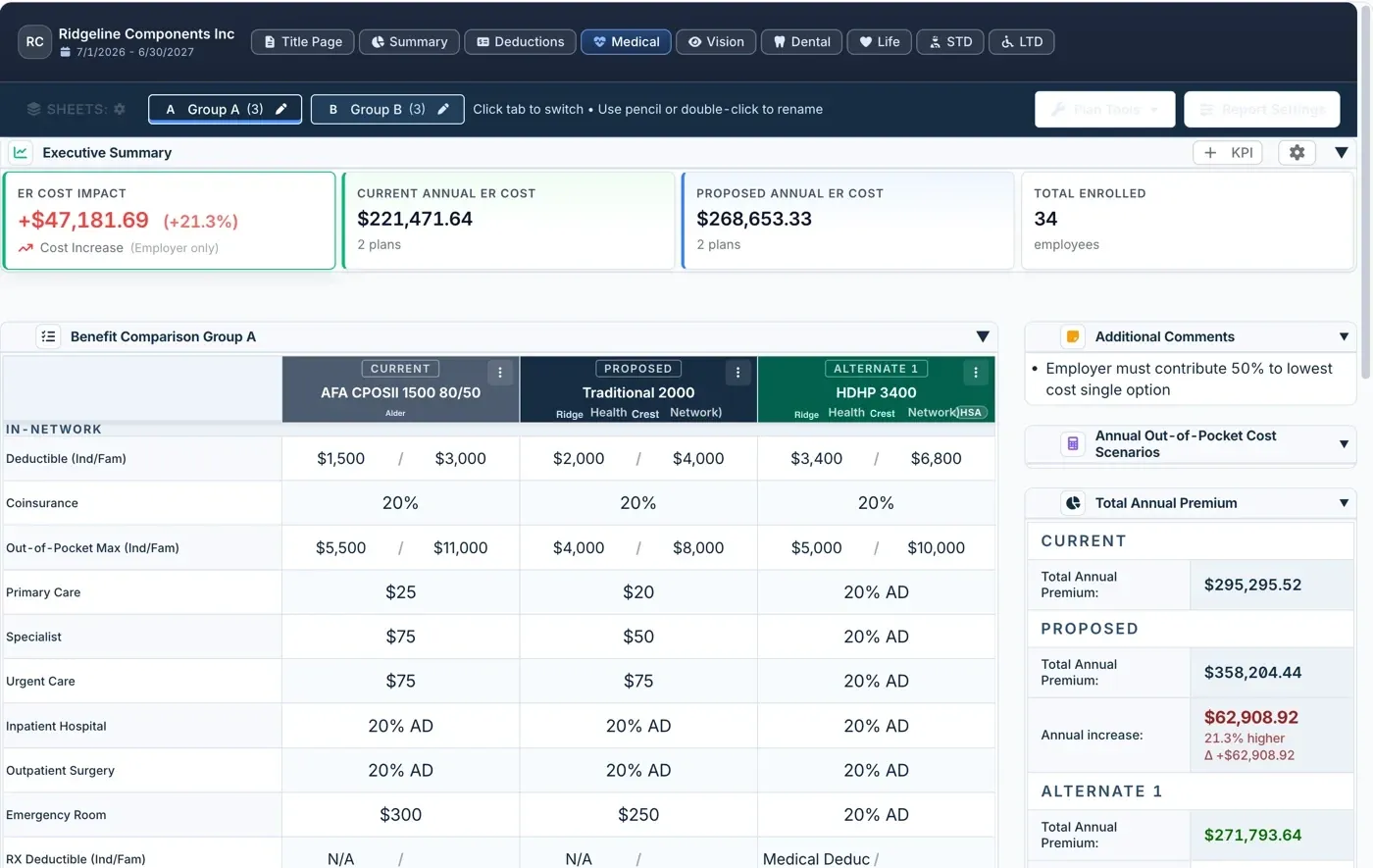
Medical insurance gets most of the attention, but ancillary benefits often make the difference between a competitive package and a losing one. Smart brokers know that a well-designed ancillary strategy can win accounts, improve retention, and generate additional revenue.
Why Ancillary Benefits Matter
Ancillary benefits punch above their weight in several ways:
- Low cost, high impact: Dental/vision cost a fraction of medical but employees rank them highly
- Retention tool: Employees who use their benefits are less likely to leave
- Differentiation: When medical options are similar, ancillary can tip the scale
- Tax efficiency: Many ancillary benefits are pre-tax for employees
- Broker revenue: Ancillary commissions add up across a book of business
The Core Ancillary Package
Most employers offer some combination of these foundational benefits:
Dental Insurance
Available to 44% of private-industry workers in March 2025, level with short-term disability and behind life insurance (BLS figures, table below). Key decisions include:
- PPO vs. DHMO: PPO offers flexibility, DHMO lowers costs
- Annual maximum: as an example plan design, a lean plan might cap at $1,000 and a richer one at $1,500–2,000; compare each quote against the group's current plan
- Orthodontia: Important for families; typically 50% to a lifetime max
- Waiting periods: Can be waived for groups moving from another carrier
Vision Insurance
Low-cost, high-satisfaction benefit. Consider:
- Exam frequency: Annual exams are standard
- Frame/lens allowance: a common plan design sets it at $100–200 (an example, not survey data)
- Contact lens coverage: Some plans are contacts-OR-glasses
- Discounts: Additional pairs, LASIK discounts add value
Basic Life & AD&D
Almost always employer-paid. Key considerations:
- Benefit amount: common plan designs use 1x salary on a basic plan and 2x on a richer one
- Guaranteed issue: Amount available without medical questions
- Accelerated death benefit: Terminal illness provision
- Portability: Can employees keep coverage if they leave?
Disability Insurance
Often overlooked but critically important:
- STD: a common plan design replaces 60% of income for 13–26 weeks; check the actual quote
- LTD: Kicks in after STD, may last to age 65
- Definition of disability: Own occupation vs. any occupation
- Elimination period: Days before benefits begin
- Tax consideration: Employer-paid premiums = taxable benefits; employee-paid = tax-free benefits
Voluntary Benefits
Voluntary (employee-paid) benefits have grown significantly. These allow employers to offer more options without increasing costs:
Popular Voluntary Options
- Supplemental life: Beyond the basic employer-paid amount
- Accident insurance: Lump sum for injuries, popular with active employees
- Critical illness: Lump sum upon diagnosis of major conditions
- Hospital indemnity: Cash payments for hospital stays
- Identity theft: Growing concern, low cost
- Pet insurance: Surprisingly popular with certain demographics
- Legal services: Pre-paid legal plans
Voluntary Success Factors
Not all voluntary offerings succeed. Key factors include:
- Enrollment support: Active enrollment drives participation
- Payroll deduction: Must be easy to administer
- Communication: Employees need to understand the value
- Pricing: Reasonable rates matter
- Portability: Can employees keep coverage if they leave?
Bundling vs. Carve-Out
One strategic decision is whether to bundle ancillary with the medical carrier or carve out to specialty carriers:
Bundling Advantages
- Single bill, single contact
- Potential bundling discounts, depending on the carrier
- Integrated member experience
- Easier administration
Carve-Out Advantages
- Best-in-class specialty carriers
- Larger networks
- More competitive standalone pricing
- Flexibility at renewal
- Better claims experience (specialty focus)
Recommendation: Evaluate both options and let the numbers guide the decision. Don't assume bundling is always better—or worse.
Contribution Strategy
How employers fund ancillary benefits varies widely:
| Benefit | Private-industry workers with access | Participants paying no premium share | Notes |
|---|---|---|---|
| Dental | 44% | Not published | Commonly offered alongside medical |
| Vision | 29% | Not published | Less widely available than dental |
| Basic Life | 59% | 98% | Almost always employer-paid when offered |
| STD | 44% | 90% | Income protection for shorter absences |
| LTD | 37% | 95% | Tax treatment depends on who pays the premium |
| Voluntary Life | Not published | Not published | Employee-paid supplemental |
| Accident | Not published | Not published | Voluntary option |
| Critical Illness | Not published | Not published | Lump sum benefit |
Source: U.S. Bureau of Labor Statistics, National Compensation Survey, March 2025, private industry workers. Access counts all private-industry workers, including those whose employer offers nothing. The last column is the share of workers enrolled in the plan whose employer requires no employee contribution. BLS does not publish these measures for voluntary accident, critical illness or supplemental life.
Presenting Ancillary to Clients
When presenting ancillary options:
- Show the total package: Medical + ancillary = total compensation
- Quantify the value: "Dental adds $X per employee but prevents $Y in turnover"
- Benchmark against industry: What are competitors offering?
- Offer tiers: Good/better/best packages at different price points
- Address administration: Make it easy for HR
Renewal Strategy
Ancillary renewals are often auto-renewed without review. Smart brokers:
- Market ancillary alongside medical (even if medical stays)
- Review claims experience if available
- Check for network changes
- Evaluate new voluntary products
- Look for bundling opportunities
Key Takeaways
- Ancillary benefits are low-cost, high-impact additions to any package
- Dental, life and disability are the core of most packages; vision is offered less often, which can make it a differentiator
- Voluntary benefits expand options without employer cost
- Bundling vs. carve-out is situational—evaluate both
- Active enrollment drives voluntary participation
- Review ancillary at every renewal, not just medical
Compare Complete Benefits Packages
Planlined handles medical, dental, vision, life, and disability comparisons in one unified platform.